Medical Marijuana Vapes and THC Vape Pens in Texas: What Patients Should Know
Quick Answer
THC vape pens are legal in Texas only for patients in the Texas Compassionate Use Program (TCUP). House Bill 46, in effect since September 1, 2025, lets registered patients vaporize low-THC cannabis but still not smoke it. The device must meet state health rules and be directed by your physician, and products are capped at 10 mg of THC per dose and 1 gram per package. A licensed dispensing organization fills the prescription your doctor enters in CURT. A physician decides whether a vape is right for you.
People search for "THC vape pen," "weed pen" and "medical vape pen" for very different reasons. In Texas, the answer to "can I use one?" depends on one thing: whether you are a registered patient in the state's medical cannabis program. This guide explains what changed in 2025, how a medical vape pen works, how it compares with other forms, and how patients qualify.
Are THC Vape Pens Legal in Texas?
Recreational marijuana, including recreational THC vape pens, is still illegal in Texas. The legal medical route is the Texas Compassionate Use Program.
Before September 1, 2025, TCUP patients could only use low-THC products taken by mouth, such as oils and tinctures, and every product was capped at 1% THC by weight. House Bill 46 (signed June 21, 2025, effective September 1, 2025) changed three things that matter for vaping:
- Inhalation is allowed, smoking is not. Patients may vaporize low-THC cannabis using inhalation devices such as vaporizers, inhalers and nebulizers. Smoking cannabis is still not allowed.
- Devices are regulated. Inhalation devices must meet rules set by the Texas Department of State Health Services and must be directed by the patient's physician.
- New THC limits. The 1% cap was replaced with a limit of 10 mg of THC per dose and 1 gram of THC per package.
A THC vape bought from a smoke shop or vape store is not part of the program. It is not prescribed, not filled against a CURT record and not covered by TCUP protections.
What Is a Medical Vape Pen?
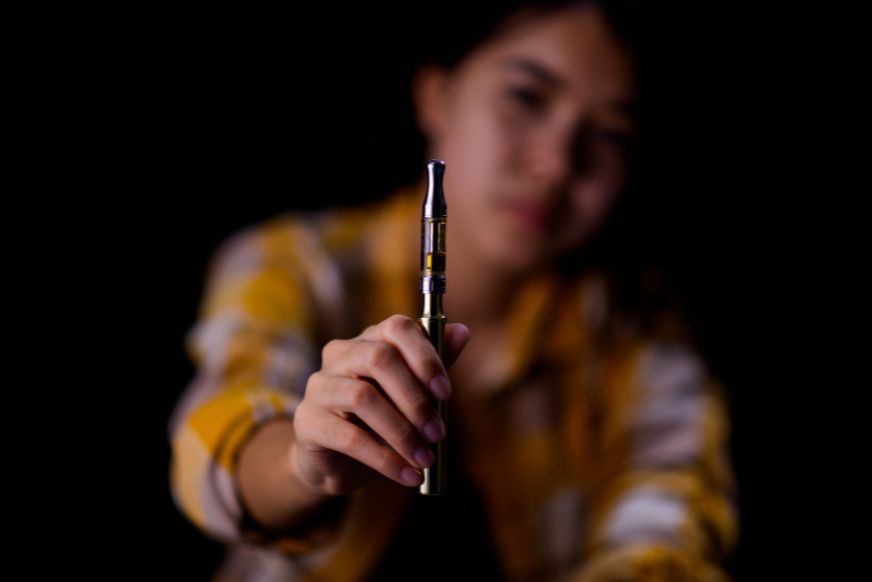
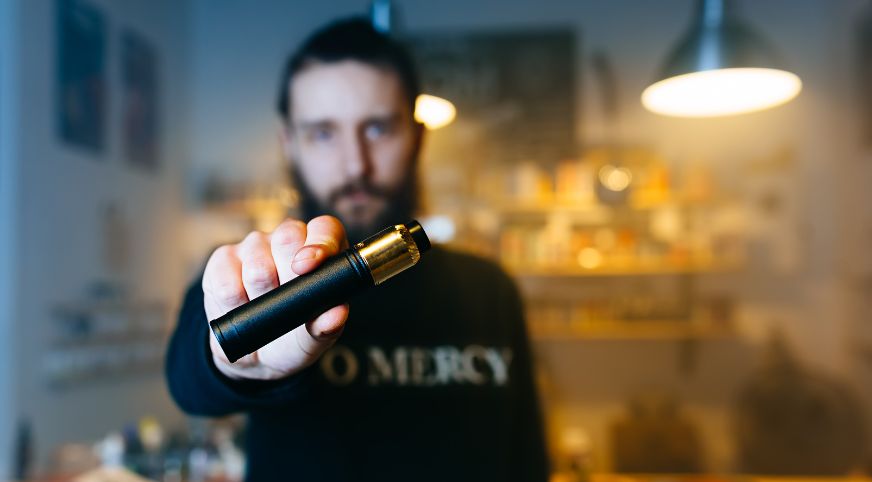
A medical vape pen is a small, battery-powered device that heats cannabis oil into a vapor you inhale. Because nothing is burned, it is not the same as smoking. Most pens have four parts:
- Battery: powers the device. Some are rechargeable, others are disposable.
- Cartridge or pod: holds the cannabis oil. Labels should list the THC and CBD content per dose.
- Heating element: warms the oil to make vapor. Many use ceramic coils, which heat evenly.
- Mouthpiece: where you inhale. Some pens switch on with a button, others when you draw.
For TCUP patients, the product and device come from a licensed dispensing organization, and the dose follows your physician's directions and the product label.

How Vaping Compares With Tinctures and Edibles
The form you use changes how fast cannabis works and how long it lasts. Effects vary from person to person, so treat these as general patterns, not dosing advice.
- Vapes: effects usually start within minutes because cannabinoids are absorbed through the lungs. They also tend to wear off sooner. Some patients and physicians consider this useful for symptoms that flare quickly.
- Tinctures and oils: held under the tongue, they often take effect in about 15 to 45 minutes and are easy to measure by the drop. See our guide to using cannabis tinctures.
- Edibles and capsules: processed through digestion, they can take an hour or more to start and usually last longest.
- Lotions and patches: also allowed under HB 46, used on the skin.
Your physician weighs your condition, other medicines, lung health and daily routine when deciding which form, if any, fits you. For a wider look at forms and cannabinoids, see how to choose the right type of medical marijuana.
Are Vape Cartridges Safe?
No inhaled product is risk-free. Vaping avoids the smoke from burning plant material, but it still puts heated aerosol into your lungs, and long-term research is limited. People with asthma, COPD or other lung conditions should raise this with their doctor before choosing an inhaled form.
Where the product comes from matters. In 2019 and 2020, the CDC linked an outbreak of serious lung injuries (EVALI) mainly to THC vaping products from informal or unregulated sources, many containing vitamin E acetate. Texas dispensing organizations operate under state licensing and testing rules, which is one reason the program only allows devices and products that meet those rules.
Who Qualifies for a Medical Marijuana Vape in Texas?
To get any TCUP product, including a vape, you must be a Texas resident with a qualifying condition, and a CURT-registered physician must decide that low-THC cannabis is appropriate for you. Qualifying conditions include:
- Epilepsy and other seizure disorders
- Multiple sclerosis and spasticity
- ALS
- Autism
- All forms of cancer
- PTSD
- Incurable neurodegenerative diseases
- Chronic pain (added by HB 46, effective September 1, 2025)
- Traumatic brain injury and Crohn's disease or other inflammatory bowel disease (added by HB 46)
- A terminal illness, or a condition for which you receive hospice or palliative care (added by HB 46)
See the full list with details on our qualifying conditions page. Anxiety, depression and insomnia on their own do not qualify, though they may be considered when they come with a qualifying condition.

How to Get a Prescription for a Medical Vape in Texas
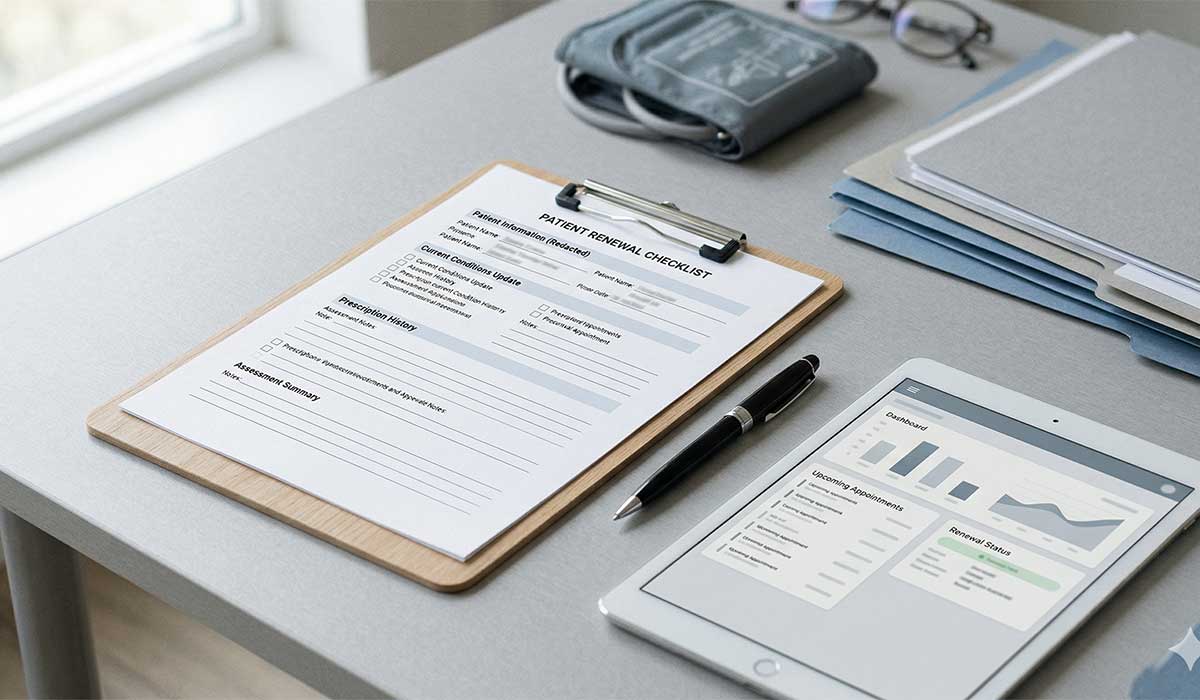
Texas does not issue medical marijuana cards. Instead, a physician enters a prescription in the Compassionate Use Registry of Texas (CURT). Here is how it works:
- Book an evaluation with a CURT-registered physician. Telemedicine visits are available statewide.
- Share your history. Bring records or a list of diagnoses, current medicines and past treatments.
- The physician decides. If low-THC cannabis is appropriate, they choose the form, dose and amount. A vape is one option, not a given.
- Prescription entered in CURT. Prescriptions can cover a 90-day supply with up to four refills.
- Fill it at a licensed dispensing organization. Find options on our Texas dispensary list.
Texas 420 Doctors does not sell, dispense or recommend cannabis products and has no affiliation with any dispensary. For the full process, read how to get medical cannabis in Texas or how CURT works.
Frequently Asked Questions
Can I legally buy a THC vape pen in Texas?
Only as a registered TCUP patient, through a licensed dispensing organization, after a physician enters a prescription for you in CURT. Recreational THC vapes are not legal in Texas.
Is vaping the same as smoking under the Texas program?
No. Since September 1, 2025, HB 46 allows patients to vaporize low-THC cannabis with approved devices, but smoking cannabis is still not allowed.
How much THC can a Texas medical vape contain?
Under HB 46, low-THC products are limited to 10 mg of THC per dose and 1 gram of THC per package. The old 1% THC by weight cap no longer applies.
Do I need a medical marijuana card to buy a vape in Texas?
No. Texas has no medical marijuana card. Your physician enters your prescription in CURT, and the dispensing organization checks the registry when you fill it.
Will my doctor prescribe a vape pen?
Not necessarily. The physician decides whether low-THC cannabis is appropriate and, if so, which form. Some patients are better suited to tinctures, capsules or topicals.
Talk to a Texas Physician About Medical Vapes
If you live in Texas and think you may have a qualifying condition, a CURT-registered physician can review your history and explain your options, including whether an inhaled form makes sense for you. Check your eligibility and book an evaluation, or see current pricing first.
References
- History for HB 46, 89th Legislature, Regular Session. Texas Legislature Online, 2025.
- Occupations Code, Chapter 169: Authority to Prescribe Low-THC Cannabis. Texas Legislature.
- Compassionate Use Program. Texas Department of Public Safety.
- Cannabis (Marijuana) and Cannabinoids: What You Need To Know. National Center for Complementary and Integrative Health (NIH).