
Can Seniors Use Medical Marijuana in Texas?
Yes. Seniors can be evaluated for medical marijuana in Texas. Older age does not disqualify a patient, and Texas law places no age limit on low-THC cannabis prescriptions. The patient must be a permanent Texas resident, have a qualifying medical condition, and receive an individualized evaluation from a qualified physician who determines that the risk of low-THC cannabis is reasonable in light of the potential benefit.
For many older adults, the harder question is not whether medical marijuana exists in Texas. It is whether it is worth bringing up now, especially when there are other medications, specialists, mobility concerns, family opinions, or long-standing hesitation about cannabis.
This guide is written for seniors, spouses, adult children, and caregivers who want a clear, careful answer before scheduling an evaluation. It does not replace a physician’s judgment. It helps you understand what may be worth discussing with someone who understands the Texas Compassionate Use Program.
If you are a retiree, a spouse helping your partner, an adult child helping a parent, or a senior who has never said the word “cannabis” out loud in a medical appointment, this page is meant to slow the conversation down. You do not need to be certain medical marijuana is right for you before asking questions. You only need to know whether the question is reasonable enough to bring to a physician.
Quick answer: Seniors may be evaluated for medical marijuana in Texas. Older age does not prevent qualification. The patient must be a permanent Texas resident with a qualifying condition, and a qualified physician must review the diagnosis, symptoms, medications, health history, fall risk, and whether the statutory risk-benefit standard is met.
Start with the guide to whether you can qualify for medical marijuana in Texas, or learn how to speak with a medical marijuana doctor in Texas.
Can Seniors Get Medical Marijuana in Texas?
Seniors can receive a low-THC cannabis prescription in Texas when they are permanent Texas residents, have a qualifying condition, and a qualified physician determines that the risk of medical use is reasonable in light of the potential benefit. The pathway is physician-led and operates through the Texas Compassionate Use Program.
The Texas Department of Public Safety oversees the Compassionate Use Program and the Compassionate Use Registry of Texas, commonly called CURT. Patients do not register themselves or pay a separate state registration fee. A qualified physician enters the patient information and prescription, and a licensed dispensing organization verifies the prescription and the patient or documented legal guardian’s identifying information before fulfillment.
Texas does not issue a physical medical marijuana card. If the legal and medical requirements are met and low-THC cannabis is prescribed, the physician enters the prescription into CURT.
Texas medical use does not include smoking. Each dosage unit may contain no more than 10 milligrams of tetrahydrocannabinols. Product form, dosing, administration, and impairment precautions should be discussed with the prescribing physician and licensed dispensing organization.
Why Older Adults Ask Different Questions About Medical Marijuana
Seniors often approach medical marijuana differently than younger patients. Many are not trying to chase a trend. They are trying to decide whether cannabis belongs anywhere near an already complicated care routine.
Older adults may be managing several medications, specialist appointments, sleep disruption, chronic discomfort, mobility changes, or daily routines that already require planning. Some live alone and worry about dizziness or confusion. Others live with a spouse, adult child, or caregiver who wants to understand what is safe, legal, and realistic.
There is also a generational layer. Many seniors grew up hearing only negative things about marijuana. Even when they are curious, they may feel embarrassed asking about it. A good medical conversation should make room for that hesitation without dismissing it.
Some seniors also worry about being judged by their church friends, their children, their longtime primary doctor, or even their spouse. Others quietly wonder whether asking about medical marijuana makes them look desperate. Those concerns are real. They are also exactly why the discussion should happen in a physician-led setting rather than through guesswork, internet comments, or pressure from family.
- Will this interact with my medications?
- Could it affect balance or fall risk?
- What if I have never used cannabis before?
- What if my family is uncomfortable with it?
- What if I already see several doctors?
- What if I live in assisted living?

What Physicians Consider When Evaluating Older Adults
A senior patient’s evaluation is not based on age by itself. The more useful question is whether low-THC medical cannabis may fit the person’s current health situation.
The review may include the qualifying condition, symptom pattern, treatment history, prescription and nonprescription medications, alcohol use, prior cannabis exposure, blood pressure changes, cardiovascular history, liver or kidney concerns, cognition, balance, falls, driving, and practical support at home. Caregiver observations can help when the patient wants support, but the senior patient remains central to the decision whenever possible.
A senior review should be individualized rather than reduced to age or diagnosis. Learn how a medical marijuana doctor in Texas evaluates eligibility, treatment history, medication risks, and practical safety.
In real appointments, useful details are often practical. A senior may mention that they keep a pill organizer on the kitchen counter, that their daughter helps refill prescriptions, that they have fallen once in the last year, or that they stopped driving at night. Those details are not small. They help connect the medical decision to day-to-day safety.
Senior reviews often need extra context because:
- Multiple prescriptions, supplements, alcohol, and cannabinoids may have additive or interacting effects.
- Dizziness, orthostatic blood-pressure changes, sedation, confusion, and impaired coordination may increase fall or injury risk.
- Symptoms may overlap with several medical or neurological conditions.
- Living situation, medication management, driving, and available support affect practical safety.
- Treatment goals should be specific enough to measure at follow-up.
Age Does Not Automatically Determine Eligibility
Many older patients ask whether they are “too old” to qualify. In Texas, the deciding issue is not the number on a driver’s license. The decision depends on the medical reason for the prescription and whether low-THC cannabis is appropriate for that patient.
| Factor | Matters? | Why It Matters |
|---|---|---|
| Age alone | No | Texas does not automatically exclude seniors because they are older. |
| Medical condition | Yes | Texas eligibility is tied to qualifying medical conditions and physician review. |
| Symptoms | Yes | The physician needs to understand how the condition affects daily life. |
| Current medications | Often | Medication review can help identify safety concerns or interaction questions. |
| Physician review | Yes | A qualified physician must determine that the risk of low-THC cannabis is reasonable in light of the potential benefit. |
The practical takeaway is simple: seniors should not count themselves out because of age, and they should not assume approval is automatic.
Common Reasons Seniors Explore Medical Marijuana
Older adults often ask about medical marijuana because something about daily life has become harder to manage. That might involve chronic discomfort, sleep concerns, neurological symptoms, cancer-related symptoms, spasticity, PTSD, or another qualifying medical issue.
Review the complete list of qualifying conditions for medical marijuana in Texas to understand the diagnosis pathways a physician may consider.
For seniors, the more personal question is often whether the symptoms are affecting quality of life enough to justify a physician conversation. That might mean trouble sleeping because of discomfort, difficulty with everyday routines, anxiety about worsening symptoms, or frustration after trying other treatment options.
The conversation may also come up after a small turning point. A patient stops walking the dog because of discomfort. A spouse notices more restless nights. An adult child sees a parent avoiding family outings. Those moments do not decide eligibility, but they can help explain why the question has become important now.
Questions Older Adults Often Ask Before Scheduling
Many seniors do not schedule because they are certain. They schedule because they are unsure and want a clear answer from a physician.
Am I too old for this?
No patient should assume they are too old based on age alone. The physician will look at the medical situation, not just the birthdate.
What about my medications?
Bring a complete medication list to the conversation. This includes prescriptions, over-the-counter products, supplements, and anything you take only sometimes.
What if I have multiple conditions?
Multiple conditions do not automatically disqualify you, but they may make the review more detailed. The physician needs the full picture.
What if I already see specialists?
Specialist care can be helpful context. Notes, diagnoses, imaging, or treatment history may help the physician understand your situation.
What if I have never used cannabis before?
Prior cannabis use is not required. Many seniors are first-time cannabis patients and need extra time to ask basic questions without feeling rushed.
What if I feel embarrassed bringing it up?
That reaction is common. Some seniors have spent decades hearing that marijuana is something responsible people avoid. A medical evaluation gives you a private place to ask whether the Texas medical program is relevant to your health, without turning the conversation into a character judgment.

Medication Concerns Seniors Frequently Raise
Medication concerns are one of the main reasons seniors should have this conversation with a physician instead of trying to sort it out alone. Many older adults take medication for blood pressure, sleep, pain, mood, heart health, diabetes, blood thinning, or other long-term conditions.
The National Institute on Aging notes that older adults often take several medications and that age-related changes can affect how medicines work. The National Center for Complementary and Integrative Health reports that cannabinoids can cause sleepiness, dizziness, cognitive effects, orthostatic hypotension, and drug interactions, all of which may matter more when fall risk or polypharmacy is already present.
Medical cannabis may not be appropriate for every senior. Closer review may be needed because of sedation, dizziness, orthostatic blood-pressure changes, balance problems, memory changes, cardiovascular concerns, liver or kidney disease, or other medications that affect alertness. Patients should not drive or operate machinery while impaired. These concerns call for an honest medication and safety review, not guesswork.
A senior who takes only one prescription may still need a careful review. A senior who takes several prescriptions is not automatically disqualified. The important part is making sure the full medication picture is understood before any decision is made.
Before the evaluation, seniors should be ready to discuss:
- All current prescriptions
- Over-the-counter medications
- Supplements and herbal products
- Past side effects from medications
- Falls, dizziness, confusion, or balance problems
- Alcohol use or sleep medication use
- Whether anyone helps manage medications at home
Do not stop, start, or change medication based on an article. Discuss medications with your physician before making decisions.
| Concern Seniors Raise | What to Discuss With the Physician |
|---|---|
| “I take a lot of medication.” | Bring the full list, including dosage, timing, supplements, and any recent changes. |
| “I live alone.” | Talk about safety, alertness, support nearby, and what to do if you feel unwell. |
| “I have balance problems.” | Mention falls, dizziness, walking aids, nighttime movement, and mobility limits. |
| “My family is worried.” | Ask what information family members should understand about Texas medical access and safety review. |
| “I have never used cannabis.” | Say that clearly so the physician can explain the conversation from the beginning. |

Caregivers and Family Members Often Have Questions Too
Many senior patients do not make healthcare decisions alone. A spouse may help manage appointments. An adult child may help with transportation or paperwork. A caregiver may notice changes in sleep, appetite, mood, pain, memory, or mobility.
Caregiver involvement can be helpful when the patient wants support, especially if the caregiver can explain daily routines, medication schedules, safety concerns, or what has changed over time. That support does not automatically make the caregiver a legal guardian. Only a legal guardian documented in CURT may act for the patient during dispensing verification. The senior patient should remain at the center of the decision whenever possible.
Family members may also have concerns because they remember marijuana differently than today’s medical cannabis programs. That is understandable. Texas medical marijuana is not recreational access. It is a physician-reviewed program for low-THC cannabis through the Texas Compassionate Use Program.
If a caregiver is helping a parent or spouse, it can be useful to write down questions before the visit instead of trying to remember everything during the appointment.
The most helpful caregivers usually do three things: they organize details, they listen carefully, and they respect the patient’s voice. A caregiver can help gather medication bottles, appointment notes, specialist names, and symptom examples, but the senior patient should still be treated as the person at the center of the decision whenever possible.
How to Talk With Family About Medical Marijuana
Family conversations can be harder than the medical question itself. A senior may worry that adult children will overreact. A spouse may feel nervous because they do not understand the Texas program. A caregiver may support the idea but still have safety questions.
It can help to keep the conversation simple: “I am not making a decision today. I am asking a physician whether this is appropriate for my health situation.” That framing lowers the pressure. It also makes clear that the goal is medical guidance, not a sudden lifestyle change.
Families should avoid pushing seniors in either direction. A loved one can help ask questions, review costs, arrange transportation, or take notes, but the patient should not feel forced into approval or scared away from asking.
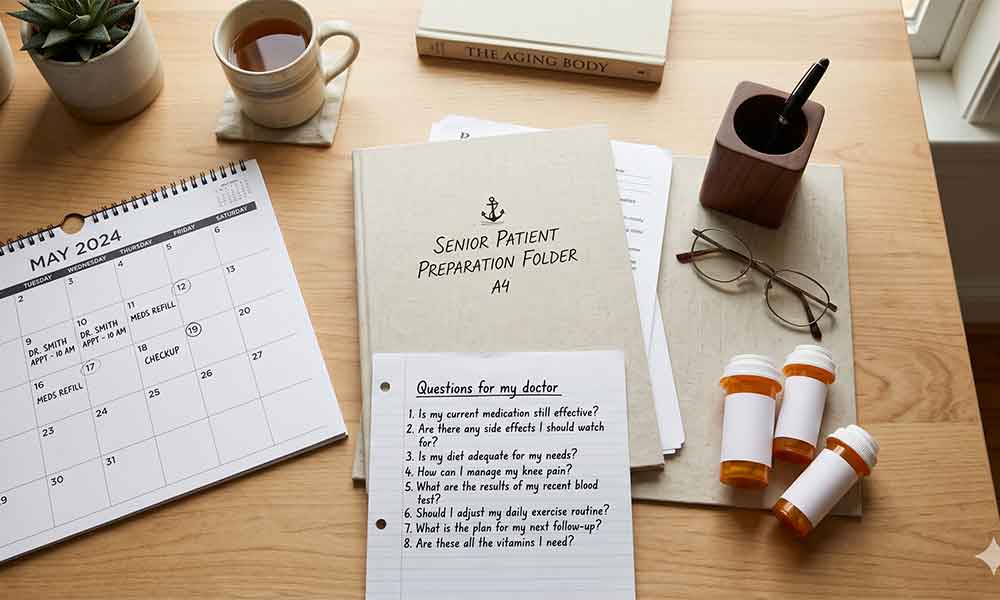
What Seniors and Caregivers Should Gather Before the Conversation
Seniors do not need a perfect file folder before asking questions, but a little preparation can make the appointment more useful.
- A current medication list, including dosage and timing
- Names of specialists or primary care providers involved in care
- Recent visit summaries, imaging, lab notes, or diagnosis records if available
- A short symptom log showing what happens during a typical week
- Notes about falls, dizziness, confusion, sleep issues, or mobility changes
- Questions from a spouse, adult child, caregiver, or legal guardian
- Details about living alone, assisted living, transportation, or daily support
This kind of preparation is especially useful for seniors who feel nervous during appointments or have trouble remembering details once the visit begins.
Common Myths About Seniors and Medical Marijuana
Myth: I am too old to qualify.
Older patients are not ruled out because of age. The medical condition, symptoms, medication picture, and overall safety context matter more.
Myth: I cannot qualify because I have never used cannabis.
Prior cannabis use is not required. Many older adults considering medical marijuana are first-time patients.
Myth: My medications automatically disqualify me.
Medications do not automatically end the conversation, but they do need to be reviewed carefully by the physician.
Myth: Seniors cannot qualify in Texas.
Seniors may qualify if they meet Texas requirements and a qualified physician determines low-THC cannabis may be appropriate.
Myth: My primary doctor has to approve it first.
A referral may be helpful in some situations, but Texas medical marijuana access depends on evaluation by a qualified physician who can prescribe through the Compassionate Use Program.
Myth: A dispensary can tell me whether I qualify.
A licensed dispensary fills prescriptions after approval. It does not replace the physician evaluation.
Myth: Asking about cannabis means I am giving up on regular medicine.
Asking a physician about medical marijuana does not mean abandoning your current care. For seniors, the safest conversation is usually about how any option might fit into the broader treatment plan.
Questions Seniors May Want to Ask a Physician
Seniors often feel more comfortable when they know what to ask. A good appointment should make room for practical questions, not just medical labels.
- How might my current medications affect this discussion?
- What should I tell you about my medical history?
- Are there age-related safety considerations I should understand?
- Could balance, dizziness, or fall risk matter in my case?
- Should my caregiver or spouse be part of the conversation?
- What information should I gather before the appointment?
- How do physicians evaluate older adults for the Texas Compassionate Use Program?
- What should I do if my family has concerns?
- What happens if medical marijuana is not a good fit for me?
These questions can help turn the visit into a real medical conversation instead of a rushed yes-or-no moment.
When Medical Marijuana May Not Be the Right Fit
Medical marijuana is not right for every senior. That is an important part of a trustworthy conversation.
A physician may decide not to prescribe when medication concerns are significant, symptoms suggest another urgent problem, the treatment target is unclear, or the risk is not reasonable in light of the potential benefit. Some seniors may need additional records, specialist input, examination, or diagnostic clarification before a decision can be made.
This does not mean the patient did something wrong. It means the physician’s job is to protect the patient, not simply approve everyone.
Seniors should also avoid using medical marijuana as a replacement for emergency care, ongoing treatment, or prescribed medication changes unless a physician specifically guides that decision.
A more cautious review may be especially important when a senior has recent confusion, repeated falls, unstable symptoms, medication changes, uncontrolled pain, severe anxiety, new weakness, or a caregiver who is worried something else is going on. In those situations, the safest next step may be more medical evaluation before cannabis is considered.
Medicare, Costs, and Fixed-Income Concerns
Texas low-THC cannabis products and medical-marijuana practice fees are generally paid out of pocket rather than billed as standard Medicare-covered care. Coverage and reimbursement can vary by plan and service, so patients should confirm directly with their Medicare plan, healthcare provider, and dispensing organization instead of assuming a cost will be covered.
Seniors on a fixed income should ask about evaluation costs, follow-up costs, and product costs before making a decision. Cost questions are not embarrassing. They are part of real healthcare planning, especially for retirees managing monthly budgets.
Review the current Texas 420 Doctors pricing page for published evaluation and membership information. Product prices charged by a licensed dispensing organization are separate, and Texas does not charge patients a separate CURT registration or physical-card fee.
Helpful cost questions include: What does the evaluation cost? Are follow-up visits separate? What happens if I am not approved? What are typical product costs after approval? Are there delivery or pickup fees through the dispensary? How often might refills or follow-ups be needed? Seniors should feel comfortable asking these questions before moving forward.
Living Alone, Assisted Living, and Practical Safety Questions
Some seniors live independently and worry about what happens if they feel dizzy, confused, sleepy, or unsteady. Others live with a spouse, adult child, or caregiver. Some live in assisted living or another care setting where medication policies may be strict.
These practical details matter. A physician may want to know whether the patient manages their own medication, uses mobility support, has a history of falls, or has someone nearby who can help if needed.
Assisted living residents should ask the facility about medication, storage, administration, and staff-assistance policies before filling a prescription. A CURT prescription does not require a private facility to provide services outside its own policies or licensing rules.
Facility questions may include where products can be stored, whether staff can assist, whether a caregiver must handle pickup, how medication records are kept, and whether the facility has its own rules about cannabis-related products. These are practical questions, not legal loopholes. Seniors and families should get clear answers before assuming the care setting can support the prescription.
Is It Worth Having a Conversation With a Physician?
For many seniors, yes, it may be worth having the conversation if symptoms are affecting daily life and there is uncertainty about whether medical marijuana belongs in the care plan.
The conversation does not have to mean you are ready to use medical cannabis. It can simply mean you want to understand whether it is medically appropriate, legal in your situation, and realistic alongside your current health needs.
Older adults deserve a careful answer, not a sales pitch. If the answer is yes, the physician can explain what happens next. If the answer is no, the patient should leave with a clearer understanding of why.
A useful way to think about it is this: if the question keeps coming up because symptoms are changing your routine, your sleep, your comfort, your independence, or your family’s caregiving responsibilities, then it may be worth asking a physician instead of carrying the uncertainty alone.
What Happens Next?
The next step is an individualized evaluation with a qualified physician. The physician confirms permanent Texas residency, reviews the qualifying condition, symptoms, medications, health history, and safety concerns, and determines whether the statutory risk-benefit standard is met.
If prescribed, the physician enters the patient information and prescription into CURT. The patient does not self-register or pay a separate state fee. A licensed dispensing organization verifies the prescription and the patient or documented legal guardian’s identifying information before coordinating fulfillment. Learn more in our guide to the Texas Compassionate Use Program and CURT.
Patients ready to speak with a physician can book a medical marijuana evaluation. After a prescription is entered, patients can review the guide to medical marijuana dispensaries in Texas.
Before your evaluation, review our medical marijuana appointment checklist to make sure you have important records, medications, symptom notes, caregiver information, and questions ready for the physician.
Seniors often expect a card to arrive after approval. Our medical marijuana card vs prescription in Texas guide explains what Texas patients actually receive.
Seniors and caregivers often have questions after approval, especially regarding registry access and next steps. Learn how CURT works after approval in Texas and what families should expect during prescription verification and dispensary coordination.
Simple next-step path:
Senior patient question
↓
Physician evaluation
↓
CURT prescription if prescribed
↓
Identity and prescription verification
↓
Licensed dispensing organization fulfillment
Trust & Physician Resources
Seniors should feel comfortable asking careful questions before making a medical marijuana decision. Texas 420 Doctors works with physicians familiar with the Texas Compassionate Use Program, CURT, and patient evaluations for low-THC medical cannabis.
You can learn more about the physician team here:
- Meet Our Medical Marijuana Doctors in Texas
- Dr. Julie Graves, MD
- Dr. Alan Tran, MD
- Dr. Alan Weiner, MD, FASAM
Seniors and caregivers across Texas can also use local pages to understand access in their area, including Houston, Dallas, Austin, San Antonio, Fort Worth, and Arlington.
Frequently Asked Questions
Can seniors qualify for medical marijuana in Texas?
Yes. Seniors may qualify if they are permanent Texas residents, have a qualifying medical condition, and a qualified physician determines that the risk of low-THC cannabis is reasonable in light of the potential benefit.
Am I too old to qualify?
No. Older age does not automatically rule you out. The more important question is whether your medical condition, symptoms, medication situation, and overall health picture support a physician-reviewed conversation.
What if I take multiple medications?
Tell the physician about every medication you take, including prescriptions, over-the-counter products, and supplements. This is one of the most important parts of the review for older adults.
What if I already see specialists?
Specialist care can help provide context. Bring records, visit summaries, diagnoses, imaging, or medication lists if you have them.
Can caregivers help?
Yes. With the patient’s permission, caregivers, spouses, and adult children may help gather information and attend appointments when appropriate. That support does not make someone a legal guardian. A legal guardian must be documented in CURT to act for the patient during dispensing verification.
Can I qualify if I have never used cannabis?
Yes. Prior cannabis use is not required. If you are new to cannabis, say so during the evaluation so the physician understands your starting point.
Do seniors use medical marijuana differently?
Seniors may need a more careful review because of medications, balance concerns, fall risk, cognitive concerns, and existing treatment plans.
Is medical marijuana legal for seniors in Texas?
Low-THC cannabis is available in Texas only through the Compassionate Use Program, with a prescription from a qualified participating physician, CURT entry, and fulfillment by a licensed dispensing organization.
What happens after approval?
If prescribed, the physician enters the patient information and prescription into CURT. The patient does not self-register or pay a separate state fee. A licensed dispensing organization verifies the prescription and the patient or documented legal guardian’s identifying information before fulfillment.
Many seniors and caregivers have concerns about beginning treatment for the first time. Learn what first-time medical marijuana patients in Texas commonly experience and what questions often arise early on.
Can I schedule an evaluation just to ask questions?
Yes. Many patients schedule because they need a physician to explain whether medical marijuana may be appropriate for their situation.
What if my family has concerns?
Family concerns are common. It can help to explain that you are asking for medical guidance through the Texas program, not making an impulsive decision or seeking recreational marijuana.
Can older adults use telemedicine?
Telemedicine may be available when a remote evaluation is clinically appropriate. The physician must still confirm the relevant patient information, conduct a genuine medical review, and make an independent prescribing decision. A caregiver or family member may help with technology when the patient agrees.
Does Medicare cover medical marijuana?
Texas low-THC cannabis products and medical-marijuana practice fees are generally paid out of pocket rather than treated as standard Medicare-covered care. Confirm coverage directly with your plan and providers before relying on reimbursement.
What if I have multiple health conditions?
Multiple conditions do not automatically prevent review, but they may make the evaluation more detailed. The physician needs to understand the full health picture.
Do I need medical records?
Medical records can help. If you do not have everything organized, bring what you have and ask what else may be useful.
If you are getting ready for an appointment, our guide to medical marijuana evaluation preparation explains what records, medications, notes, and information can help make the evaluation process smoother and less stressful.
Can I qualify if I live in assisted living?
Possibly, but approval does not automatically answer facility policy questions. Assisted living residents should ask the facility about medication rules, storage policies, and caregiver support.
Can seniors qualify if they have chronic pain?
A condition that causes chronic pain may qualify when the full Texas statutory definition is met. The physician must review the underlying diagnosis, pain duration and severity, prior treatment, medications, and whether tetrahydrocannabinol is a viable method of treatment.
Can a spouse help with the process?
Yes. A spouse can help gather records, write down questions, attend the appointment when appropriate, and support next steps.
Do I need a Texas medical marijuana card?
No. Texas does not issue a physical medical marijuana card. If prescribed, the physician enters the prescription into CURT, and patients do not complete a separate state registration or pay a state patient fee.
Can I smoke medical marijuana in Texas?
No. Texas medical use of low-THC cannabis does not include smoking. Product options and use instructions should be discussed with the physician and licensed dispensary.
What if I am nervous about asking?
That is normal. Many seniors feel hesitant because of stigma or past beliefs about marijuana. A physician evaluation is a place to ask questions honestly.
What if I live alone?
Living alone does not automatically prevent review, but it is worth telling the physician. Support at home, balance concerns, and medication routines may matter.
Should my adult child join the appointment?
That depends on your comfort and the appointment rules. Some seniors prefer support from an adult child or caregiver, especially when discussing medications, records, or next steps.
What if I do not want my family to know?
Seniors can ask privacy questions before the appointment. At the same time, if someone helps manage medications or daily care, it may be worth discussing whether their involvement would improve safety.
Still Wondering If Medical Marijuana Is Worth Discussing?
You do not need to have every answer before speaking with a physician. Many seniors start with uncertainty, especially when medications, family concerns, and long medical histories are part of the picture.
If symptoms are affecting your daily life and you want to understand whether Texas medical marijuana may be appropriate, a physician evaluation can help you get a clearer answer.
Next step: Get clarity before you decide. If you are a senior patient, spouse, or caregiver trying to understand whether medical marijuana belongs in the conversation, schedule an evaluation and ask the questions you need answered.
Medical Disclaimer
This page is for educational purposes only and does not provide medical advice. Low-THC cannabis may not be appropriate for every patient. Seniors should speak with a qualified physician before making decisions, especially when medications, cardiovascular disease, liver or kidney problems, cognitive changes, falls, driving, living alone, or caregiver support affect safety. New confusion, fainting, chest pain, sudden weakness, repeated falls, or another urgent change requires prompt medical care rather than a routine cannabis evaluation.
